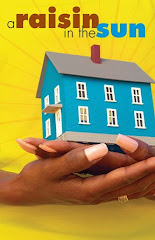
Broadway in the 1950s & 60s (site 1)
This website talks about what was going on in the 1900s and how these events influenced play writers. In the 1950’s there was the Red Scare and a lot going on with gang members on the streets of Harlem, New York and Los Angeles which inspired West Side Story. There was also the era of rock ‘n’ roll where Elvis had influenced a playwright. John F. Kennedy was assassinated in the 60’s which was an important even that inspired Camelot. This website also talks about how the civil rights movement began.
Broadway in the 1950s & 60s (site 2)
This website talks about actors and directors that were nominated for Oscars. Many of the people mentioned on this site did not win the Oscars but are remembered for their work in Broadway.
***
Black & female playwrites, directors, and producers in the 1950s & 60s (site 1)
What I found on this website was that it was based on a woman by the name of Vinnette Carroll, who was the first black woman to direct a production on Broadway. She had won numerous awards for her work, and was also part of local organizations. It basically talks about her life as a female yearning to be part of art somehow, and her challenges of being a black female.
Black & female playwrites, directors, and producers in the 1950s & 60s (site 2)
This link is talking about how black people during this time had to play unimportant parts in order to be part of a play. It also mentions that other common ways for black people to be featured in plays was by making them a victim of a ‘bullet in the gut’, basically getting killed later on. But it also mentions that not all black people were offended by this, some are pleased. Therefore it shows the different ways blacks take these approaches to them.
Black & female playwrites, directors, and producers in the 1950s & 60s (site 3)
In this blog there was a lot of irrelevant information but there was one piece that caught my attention. There was a poem from the 1960’s by Mary Evans who was a black poet. Her poem has a lot of meaning and showed how black women back in the day where and felt about everything. The poem said their feelings and their views that demonstrated a lot about them.
Black & female playwrites, directors, and producers in the 1950s & 60s (site 4)
It was Motown’s all female singing group that was a hit in-between the years 1964-1969. These girls had 12 -#1 hits that expressed R&B music, most writing and producing by Holland-Dozier-Holland. These ladies, at first, where The Primes but then later ended up signing with Motown, to which their name changed. These women set an imagine for black women all around by their talent and success. In this group there where three women under the names of Florence Ballard, Mary Wilson and Diana Ross. Betty McGlown was part of the group before they became the Supremes, that was when they where the Primes.
***
Sidney Poitier (site 1)
Poitier was a man born in Miami, Fl but grew up in Cat Island, Bahamas. Poitier grew up in poverty as the son of a dirt farmer. He had little formal education and at the age of 15 was sent to Miami to live with his brother. Because he was treated so poorly in Miami, he made it his goal to find opportunities for black people to succeed. At the age of 18 he left for New York and landed his first Broadway play. He played in many famous films such as a Raisin in the Sun, and Guess Who’s Coming to Dinner?
Sidney Poitier (site 2)
Poitier was born on February 20, 1927. He enrolled in theater school in New York in the 1970s. His films included Buck and the Preacher, Uptown Saturday Night, and the successful comedy, Stir Crazy with Richard Pryor and Gene Wilder. Poitier returned to acting in 1988 in the films Shoot to Kill and Little Nikita, followed by Sneakers (1992).
***
New York Drama Critics' Circle Award (site 1)
This is the main website for the New York Drama Critics’ Circle Award. On this website there is a lot of information about the awards and the history of the events. There are six links on the main page that lead to other pages and each page has different information provided. The different information that can be received from these links are: the awards for this year, awards from the past, the history of the New York Drama Critics’ Circle Award, the membership of people that take part in the event, the upcoming events and ways to contact the New York Drama Critics’ Circle Award.
New York Drama Critics' Circle Award (site 2)
This next website is the main website for The Pulitzer Prizes. The prizes are for people that highly participate in the categories of journalism, letters, drama and music. On this website there are many links that lead to information about The Pulitzer Prizes and people that participate in the event. Some specific things that can be found on the websites through the links are information about current winners and finalists, past winners and finalists, how to enter, contact information and the different prizes that can be won.
Monday, April 6, 2009

Sunday, April 5, 2009
Lorraine Hansberry’s Life & Works (per 2)
Hansberry's Life (site 1)
That link leads to a website that shows Hansberry’s biography and different works that she wrote. It goes through different stages of her life from childhood to her death of cancer in 1965. It tells also dates of when different works of her were coming out.
Hansberry's Life (site 2)
This link tells us the names of Lorraine’s parents and a lot of her childhood information. It shows you her academic career. Later she married white Jewish boy named Robert Nemiroff. It mentions her most important plays in her career.
***
"Young, Gifted, and Black" by Lorraine Hansberry (site 1)
During Lorraine Hansberry’s time, inequality between white people and black still exists; she encouraged black people that they can do things well as the white people. Young, gifted and black; these three words are suitable to describe them. They can use these elements to contribute the community.
"Young, Gifted, and Black" by Lorraine Hansberry (site 2)
It was a song written by Nina Simone and Weldon Irvine. It has the same title as Hansberry’s play, to be Young, gifted and black. The song expresses that it’s proud to be young, gifted and black. When you feel really down and upset, you should think about you are young, gifted and black. You could be creative, intelligence. Try to open your heart and adapt the truth.
***
“The Sign in Sidney Brustein’s Window” by Lorraine Hansberry (site 1)
“The Sign in Sidney Brustein’s Window” is the second Broadway play by Lorraine Hansberry. It is about social and moral responsibility. It sets in New York’s Greenwich Village, 1960. The first published is in 1965’s. There are many characters and relationships in the play; it makes for a problematic evening. The main character in this play is Sidney Brustein, he is a smug man who blinds to his own casual injustices and supports a reform candidate in a local election. He is surrounded by a colorful collection of characters, among his wife, Iris. His black best friend is a gay playwright and a Beat artist.
“The Sign in Sidney Brustein’s Window” by Lorraine Hansberry (site 2)
idney is a clever bastard, sometimes sweet, often charming. He is mean to family, friends and neighbors alike. The comeuppance Sidney gets by the end of the play is that every thing he thought he knew, even about the people closest to him, turns out to be completely wrong. Hansberry loved Sidney’s sister-in-law, Mavis because she did all the best things in the play.
***
"Les Blancs" by Lorraine Hansberry (site 1)
Lorraine Hansberry was the first black women who wrote a drama. “Les Blancs” was her last work in her life. The play tells us how different groups of people survive the violent forces of colonization.
"Les Blancs" by Lorraine Hansberry (site 2)
“Les Blancs” was a book that Robert Nemiroff helped Hansberry edited and published the anthology of her work. It was a play about liberation movements. He put Hansberry’s last 3 plays together to form a book. And in the scene in Les Blancs, Hansberry advances the need for dialogue between the oppressed and the oppressor. It shows that there are different types of personality people
***
"The Drinking Gourd" by Lorraine Hansberry (site 1)
This link tells you a summary about “The Drinking Gourd”. Also it tells the summary about the original version of the story. This link tells you about back round information about the website. There is also a synopsis on the story. Warning this synopsis is a spoiler! If your one of those people who hate spoilers then don’t read this. It also tells the different version of “The Drinking Gourd”.
"The Drinking Gourd" by Lorraine Hansberry (site 2)
This link is basically a timeline of the Drinking Gourd. The Drinking Gourd was actually discovered by a boy signing a song. Also the Drinking Gourd was first published by H.B. Parks. Then a couple of years later it was made into a folk song. This song became famous for the meaning. Also just incase you don’t understand
That link leads to a website that shows Hansberry’s biography and different works that she wrote. It goes through different stages of her life from childhood to her death of cancer in 1965. It tells also dates of when different works of her were coming out.
Hansberry's Life (site 2)
This link tells us the names of Lorraine’s parents and a lot of her childhood information. It shows you her academic career. Later she married white Jewish boy named Robert Nemiroff. It mentions her most important plays in her career.
***
"Young, Gifted, and Black" by Lorraine Hansberry (site 1)
During Lorraine Hansberry’s time, inequality between white people and black still exists; she encouraged black people that they can do things well as the white people. Young, gifted and black; these three words are suitable to describe them. They can use these elements to contribute the community.
"Young, Gifted, and Black" by Lorraine Hansberry (site 2)
It was a song written by Nina Simone and Weldon Irvine. It has the same title as Hansberry’s play, to be Young, gifted and black. The song expresses that it’s proud to be young, gifted and black. When you feel really down and upset, you should think about you are young, gifted and black. You could be creative, intelligence. Try to open your heart and adapt the truth.
***
“The Sign in Sidney Brustein’s Window” by Lorraine Hansberry (site 1)
“The Sign in Sidney Brustein’s Window” is the second Broadway play by Lorraine Hansberry. It is about social and moral responsibility. It sets in New York’s Greenwich Village, 1960. The first published is in 1965’s. There are many characters and relationships in the play; it makes for a problematic evening. The main character in this play is Sidney Brustein, he is a smug man who blinds to his own casual injustices and supports a reform candidate in a local election. He is surrounded by a colorful collection of characters, among his wife, Iris. His black best friend is a gay playwright and a Beat artist.
“The Sign in Sidney Brustein’s Window” by Lorraine Hansberry (site 2)
idney is a clever bastard, sometimes sweet, often charming. He is mean to family, friends and neighbors alike. The comeuppance Sidney gets by the end of the play is that every thing he thought he knew, even about the people closest to him, turns out to be completely wrong. Hansberry loved Sidney’s sister-in-law, Mavis because she did all the best things in the play.
***
"Les Blancs" by Lorraine Hansberry (site 1)
Lorraine Hansberry was the first black women who wrote a drama. “Les Blancs” was her last work in her life. The play tells us how different groups of people survive the violent forces of colonization.
"Les Blancs" by Lorraine Hansberry (site 2)
“Les Blancs” was a book that Robert Nemiroff helped Hansberry edited and published the anthology of her work. It was a play about liberation movements. He put Hansberry’s last 3 plays together to form a book. And in the scene in Les Blancs, Hansberry advances the need for dialogue between the oppressed and the oppressor. It shows that there are different types of personality people
***
"The Drinking Gourd" by Lorraine Hansberry (site 1)
This link tells you a summary about “The Drinking Gourd”. Also it tells the summary about the original version of the story. This link tells you about back round information about the website. There is also a synopsis on the story. Warning this synopsis is a spoiler! If your one of those people who hate spoilers then don’t read this. It also tells the different version of “The Drinking Gourd”.
"The Drinking Gourd" by Lorraine Hansberry (site 2)
This link is basically a timeline of the Drinking Gourd. The Drinking Gourd was actually discovered by a boy signing a song. Also the Drinking Gourd was first published by H.B. Parks. Then a couple of years later it was made into a folk song. This song became famous for the meaning. Also just incase you don’t understand
Hansberry’s life, family, & cultural heritage (per 2)
Loraine Hansberry’s African Heritage (site 1)
Loraine Hansberry’s African Heritage (site 2)
The links that I got contains a whole lot of information on Lorraine Hansberry having to deal with segregation, discrimination and other things that you would of never pictured. Lorraine Hansberry was born in Chicago on May 19, 1930 she was the youngest. When she got older about eight they were the first black family to move into a white neighborhood. Lorraine’s play had a very great impact during the 1950’s and 1960’s. Her play addressed the role of black people and the feminist issue. Lorraine Hansberry was really inspired by Langston Hughes. It also contained information on her father on how he was and inspiration to a university.
***
Paul Robinson (Hansberry's uncle) (site 1)
In 1915 Paul Robinson won a four-year scholarship to Rutgers University. He encountered some violence and racism, but nonetheless earned 15 varsity letters in baseball and basketball, and was twice named to the All-American football team, and finally, 13 years after his death, was admitted to the Football Hall of Fame. In later years, his name was removed from the Rutgers football team in reaction to his troubles with the Senator McCarthy hearings and the U.S. State Department's actions against him. This resulted in Rutgers having a football team of only ten players for those past years of Paul Robeson's stardom. Paul decided to study law, and graduated from Columbia Law School, the third black man to do so. But when he faced the realities of a Negro practicing law, and could do not get a white secretary to take his dictation, Paul Robeson decided his future might be in other pursuits, and answered requests to make movies and give concerts. This man, who became the most prominent baritone singer of his time, was denied membership in his college choir because of restrictions of campus social life denying Negroes participation.
***
Howard University (site 1)
This clip is the Howard University’s Marching band practicing. Howard University has many extra curricular activities that their students are involved in that makes their school life more enjoyable. Pay attention to the instruments.
Howard University (site 2)
After the Civil War, the First Congregational Society of Washington wanted to set up a school for African American clergymen. It was named after General Oliver O. Howard who was a civil war hero and founder. On March 2, 1867, The University charter as enacted by Congress approved Howard as a school of liberal arts, services. Now Howard U has 12 schools, and Howard University is one of only 48 U.S. private. The University continues to attract the nation’s top students and produces more on-campus African-American Ph.D.s than any other university in the world.
***
The Belgian Congo (site 1)
This link has an essay that generally elaborates on King Leopold II and the development of his Belgian empire. Also, there is a lot of background information about King Leopold's background and how he went about running the region, as far as trade, rules, the discipline and more about economy.
The Belgian Congo (site 2)
This article further discusses how negatively the King ran the colony. It also mentions information about his cruel treatments to the people in the empire and relationships with different governments of Europe.
Loraine Hansberry’s African Heritage (site 2)
The links that I got contains a whole lot of information on Lorraine Hansberry having to deal with segregation, discrimination and other things that you would of never pictured. Lorraine Hansberry was born in Chicago on May 19, 1930 she was the youngest. When she got older about eight they were the first black family to move into a white neighborhood. Lorraine’s play had a very great impact during the 1950’s and 1960’s. Her play addressed the role of black people and the feminist issue. Lorraine Hansberry was really inspired by Langston Hughes. It also contained information on her father on how he was and inspiration to a university.
***
Paul Robinson (Hansberry's uncle) (site 1)
In 1915 Paul Robinson won a four-year scholarship to Rutgers University. He encountered some violence and racism, but nonetheless earned 15 varsity letters in baseball and basketball, and was twice named to the All-American football team, and finally, 13 years after his death, was admitted to the Football Hall of Fame. In later years, his name was removed from the Rutgers football team in reaction to his troubles with the Senator McCarthy hearings and the U.S. State Department's actions against him. This resulted in Rutgers having a football team of only ten players for those past years of Paul Robeson's stardom. Paul decided to study law, and graduated from Columbia Law School, the third black man to do so. But when he faced the realities of a Negro practicing law, and could do not get a white secretary to take his dictation, Paul Robeson decided his future might be in other pursuits, and answered requests to make movies and give concerts. This man, who became the most prominent baritone singer of his time, was denied membership in his college choir because of restrictions of campus social life denying Negroes participation.
***
Howard University (site 1)
This clip is the Howard University’s Marching band practicing. Howard University has many extra curricular activities that their students are involved in that makes their school life more enjoyable. Pay attention to the instruments.
Howard University (site 2)
After the Civil War, the First Congregational Society of Washington wanted to set up a school for African American clergymen. It was named after General Oliver O. Howard who was a civil war hero and founder. On March 2, 1867, The University charter as enacted by Congress approved Howard as a school of liberal arts, services. Now Howard U has 12 schools, and Howard University is one of only 48 U.S. private. The University continues to attract the nation’s top students and produces more on-campus African-American Ph.D.s than any other university in the world.
***
The Belgian Congo (site 1)
This link has an essay that generally elaborates on King Leopold II and the development of his Belgian empire. Also, there is a lot of background information about King Leopold's background and how he went about running the region, as far as trade, rules, the discipline and more about economy.
The Belgian Congo (site 2)
This article further discusses how negatively the King ran the colony. It also mentions information about his cruel treatments to the people in the empire and relationships with different governments of Europe.
African-American artists & writers in the 1950s & 60s (per 2)
Black Arts Movement (site 1)
This site is written by a person, so it's like a essay. It talks about black art moements in the 1960's. It has a lot of information and it is written by a person named Kaluma Ya Salaam. The site is credible because the link ends with a EDU (short for education). It also gives us names of some important African Americans who were writers or artists and how they contributed to the movements. There are also examples of quotes spoken by these people in this website.
Black Arts Movement (site 2)
This is a site that talks about a book dedicated to this subtopic. It's also very reliable because it's url ends with a EDU. The website has a summary of the book that deals with black art's movements. It's more like a reference site that can help you find something if you were looking for it. There are more sources available on the topic on that site.
***
Paul Robeson (site 1)
Paul Robeson was the youngest of his family and was the grandson of slaves and a son of a minister. He was Valedictorian of Rutgers University. He was great in many sports, got a degree from a law school, and also got married. He starred in many films to get the voice for blacks right making him known all over the world wherever he traveled to.
Paul Robeson (site 2)
Paul Robeson was an all American football player and was most talented in the 20th century. He was a very controversial figure from his criticism of American racism. His father taught him many things that helped him in life. Paul Robeson became to understand more about writing and is known as a worldwide symbol of resistance and oppression.
***
James Baldwin (site 1)
Baldwin is a bright child and was very active in the community. Even though he had jobs that were poorly paid and was very tiring, he still kept on going on with life. He enjoys participating in the struggles in the community and writes about them in his books.
James Baldwin (site 2)
***
Langston Hughes (site 1)
This website is about the life of Langston Hughes and the things in life that he liked to do where they liked to go. This website says where he liked to live, some of the types of music he liked, and other things he liked and disliked. This website also included one of his poems. The website talks about when he was born and his life as a child in school.
Langston Hughes (site 2)
This website is a new piece by composer Laura Karpman called Ask Your Mama, featuring the poetry of Langston Hughes. This song was influenced by Langston Hughes' poem Ask Your Mama: 12 Moods for Jazz. The website has a interview of the composer talking about what attracted her to the poem and where a she was at the time she saw the poem which has a lot to do with why she wrote the piece. Karpman says how she feels about Langston Hughes as a writer.
***
Hansberry's work as an artist and a writer (site 1)
On this site, you are able to find a brief biography of Lorraine Hansberry and the events in her life that inspired her later in her works. The site also have brief introduction of her play, A Raisin in the Sun. There were also analysis from authors and teachers.
Hansberry's work as an artist and a writer (site 2)
This website has a short description of A Raisin in the Sun and how Hansberry's work was inspired by Langston Hughes. Her work has significance to the American history because she was the first African American woman to write a play that was produced on Broadway. Also the site had mentioned other important people who changed American history like martin Luther king.
This site is written by a person, so it's like a essay. It talks about black art moements in the 1960's. It has a lot of information and it is written by a person named Kaluma Ya Salaam. The site is credible because the link ends with a EDU (short for education). It also gives us names of some important African Americans who were writers or artists and how they contributed to the movements. There are also examples of quotes spoken by these people in this website.
Black Arts Movement (site 2)
This is a site that talks about a book dedicated to this subtopic. It's also very reliable because it's url ends with a EDU. The website has a summary of the book that deals with black art's movements. It's more like a reference site that can help you find something if you were looking for it. There are more sources available on the topic on that site.
***
Paul Robeson (site 1)
Paul Robeson was the youngest of his family and was the grandson of slaves and a son of a minister. He was Valedictorian of Rutgers University. He was great in many sports, got a degree from a law school, and also got married. He starred in many films to get the voice for blacks right making him known all over the world wherever he traveled to.
Paul Robeson (site 2)
Paul Robeson was an all American football player and was most talented in the 20th century. He was a very controversial figure from his criticism of American racism. His father taught him many things that helped him in life. Paul Robeson became to understand more about writing and is known as a worldwide symbol of resistance and oppression.
***
James Baldwin (site 1)
Baldwin is a bright child and was very active in the community. Even though he had jobs that were poorly paid and was very tiring, he still kept on going on with life. He enjoys participating in the struggles in the community and writes about them in his books.
James Baldwin (site 2)
***
Langston Hughes (site 1)
This website is about the life of Langston Hughes and the things in life that he liked to do where they liked to go. This website says where he liked to live, some of the types of music he liked, and other things he liked and disliked. This website also included one of his poems. The website talks about when he was born and his life as a child in school.
Langston Hughes (site 2)
This website is a new piece by composer Laura Karpman called Ask Your Mama, featuring the poetry of Langston Hughes. This song was influenced by Langston Hughes' poem Ask Your Mama: 12 Moods for Jazz. The website has a interview of the composer talking about what attracted her to the poem and where a she was at the time she saw the poem which has a lot to do with why she wrote the piece. Karpman says how she feels about Langston Hughes as a writer.
***
Hansberry's work as an artist and a writer (site 1)
On this site, you are able to find a brief biography of Lorraine Hansberry and the events in her life that inspired her later in her works. The site also have brief introduction of her play, A Raisin in the Sun. There were also analysis from authors and teachers.
Hansberry's work as an artist and a writer (site 2)
This website has a short description of A Raisin in the Sun and how Hansberry's work was inspired by Langston Hughes. Her work has significance to the American history because she was the first African American woman to write a play that was produced on Broadway. Also the site had mentioned other important people who changed American history like martin Luther king.
Civil rights movement & housing (de)segregation in the 1950s & 60s & today (per 2)
Housing (de) Segregation in 1950s-1960s (site #1)
This website is talking about housing segregation and desegregation in the 1960s. It talks about these books called HOUSING SEGREGATION IN SUBURBAN AMERICA SINCE 1960: PRESIDENTIAL AND JUDICIAL POLITICS, by Charles M. Lamb. This website talks about what is in the book. How around the 1950s-60s colored people were separated from whites. If they moved into certain neighborhoods they would get beaten and/or chased down.
Housing (de) Segregation in 1950s-1960s (site #2)
This website is a newspaper article in the New York Times. The title of the article is HOUSING SEGREGATION: NEW TWISTS AND OLD RESULTS. This article is talking about how people think New York housing is the most segregated in the country. But studies show that that is not true. It also mentions studies that explain why New York is not most segregated in the country.
***
Hansberry Rights Case That was taken to the Illinois Supreme Court and Housing Desegregation (site #1)
This source is about determination in buying a house. This source talks about how when colored people buy a house they wouldn’t be discriminated. Back then if a colored person you would have to pay twice as much for a house. In 1968 congress responded to mounting evidence of intractable housing discrimination by enacting the fair housing act. In conclusion this article basically about how buying a house back then for colored people was tough.
Hansberry Rights Case That was taken to the Illinois Supreme Court and Housing Desegregation (site #2)
This article is about a case in Chicago Illinois. The case on Hansberry v. Lee happens in the year of 1940. It’s Loraine Hansberry and her family couldn’t buy a house because of the color of their skin. So they went to the court talking about the treatment they have received since they wanted to buy a house in the white neighborhood.
***
Rev. Dr. Martin Luther Ming, jr. (site #1)
This video highlights the assignation of Martin Luther King. On April 4th 1968 Martin Luther King Jr. was assassinated standing on the balcony of his motel room in Memphis. He was meeting with Jesse Jackson and other civil rights activists. Martin Luther King was murdered at he age of 39. James Earl Ray was convicted for the assignation of MLK.
Rev. Dr. Martin Luther Ming, jr. (site #2)
This website is a biographical outline of MLK. Martin Luther king was born at noon on Tuesday, January 15, 1929 at the family home, 501 Auburn Avenue, N.E., Atlanta, Georgia. He married Coretta Scott and later on had four children Yolanda Denise, Martin Luther III , Dexter Scott , and Bernice Albertine. MLK began school at five and advanced to Morehouse College at the age of fifteen. Along wih the great effect MLK has had on the world he also recieved multiple awards and degrees.MLK was elected President of the Montgomery Improvement Association, the organization that was responsible for the successful Montgomery Bus Boycott from 1955 to 1956 and was a founder and president of the Southern Christian Leadership Conference from 1957 to 1968. MLK published any books one being, "Where Do We Go From Here: Chaos or Community?" Lastly, MLK was shot to his death in Memphis, Tennessee on April 4, 1968. Dr. King was in Memphis to help lead sanitation workers in a protest against low wages and intolerable working conditions.
Rev. Dr. Martin Luther Ming, jr. (site #3)
This website is a timeline of events of Martin Luther King's life. This timeline starts from when he was born to the day a national holiday was made in his honor.
***
Housing (de) Segregation Today (site #1)
This website talks about the income of segregation in housing. They believe that in order to get integrated schools, we must integrate neighborhoods and cities first. The site also contains percentage of segregation between blacks and whites.
Housing (de) Segregation Today (site #2)
This article is more of an opinion but it has tons of facts on why house desegregated should take place soon. The writer describes his point of view on why desegregation should happen and what the benefits are. The writer also shares percentage with reader.
This website is talking about housing segregation and desegregation in the 1960s. It talks about these books called HOUSING SEGREGATION IN SUBURBAN AMERICA SINCE 1960: PRESIDENTIAL AND JUDICIAL POLITICS, by Charles M. Lamb. This website talks about what is in the book. How around the 1950s-60s colored people were separated from whites. If they moved into certain neighborhoods they would get beaten and/or chased down.
Housing (de) Segregation in 1950s-1960s (site #2)
This website is a newspaper article in the New York Times. The title of the article is HOUSING SEGREGATION: NEW TWISTS AND OLD RESULTS. This article is talking about how people think New York housing is the most segregated in the country. But studies show that that is not true. It also mentions studies that explain why New York is not most segregated in the country.
***
Hansberry Rights Case That was taken to the Illinois Supreme Court and Housing Desegregation (site #1)
This source is about determination in buying a house. This source talks about how when colored people buy a house they wouldn’t be discriminated. Back then if a colored person you would have to pay twice as much for a house. In 1968 congress responded to mounting evidence of intractable housing discrimination by enacting the fair housing act. In conclusion this article basically about how buying a house back then for colored people was tough.
Hansberry Rights Case That was taken to the Illinois Supreme Court and Housing Desegregation (site #2)
This article is about a case in Chicago Illinois. The case on Hansberry v. Lee happens in the year of 1940. It’s Loraine Hansberry and her family couldn’t buy a house because of the color of their skin. So they went to the court talking about the treatment they have received since they wanted to buy a house in the white neighborhood.
***
Rev. Dr. Martin Luther Ming, jr. (site #1)
This video highlights the assignation of Martin Luther King. On April 4th 1968 Martin Luther King Jr. was assassinated standing on the balcony of his motel room in Memphis. He was meeting with Jesse Jackson and other civil rights activists. Martin Luther King was murdered at he age of 39. James Earl Ray was convicted for the assignation of MLK.
Rev. Dr. Martin Luther Ming, jr. (site #2)
This website is a biographical outline of MLK. Martin Luther king was born at noon on Tuesday, January 15, 1929 at the family home, 501 Auburn Avenue, N.E., Atlanta, Georgia. He married Coretta Scott and later on had four children Yolanda Denise, Martin Luther III , Dexter Scott , and Bernice Albertine. MLK began school at five and advanced to Morehouse College at the age of fifteen. Along wih the great effect MLK has had on the world he also recieved multiple awards and degrees.MLK was elected President of the Montgomery Improvement Association, the organization that was responsible for the successful Montgomery Bus Boycott from 1955 to 1956 and was a founder and president of the Southern Christian Leadership Conference from 1957 to 1968. MLK published any books one being, "Where Do We Go From Here: Chaos or Community?" Lastly, MLK was shot to his death in Memphis, Tennessee on April 4, 1968. Dr. King was in Memphis to help lead sanitation workers in a protest against low wages and intolerable working conditions.
Rev. Dr. Martin Luther Ming, jr. (site #3)
This website is a timeline of events of Martin Luther King's life. This timeline starts from when he was born to the day a national holiday was made in his honor.
***
Housing (de) Segregation Today (site #1)
This website talks about the income of segregation in housing. They believe that in order to get integrated schools, we must integrate neighborhoods and cities first. The site also contains percentage of segregation between blacks and whites.
Housing (de) Segregation Today (site #2)
This article is more of an opinion but it has tons of facts on why house desegregated should take place soon. The writer describes his point of view on why desegregation should happen and what the benefits are. The writer also shares percentage with reader.
Saturday, April 4, 2009
Theatre in the 1950s & 60s (per 2)
Broadway from the 1960’s till the 1970’s (Site #1)
This document is about 1960’s where there was much going on in Broadway. There was much going about on black’s voter rights, and being equal in the work place. Though there was no equality on Broadway, till a black actress made her way in this musical that took place there.
Broadway from the 1960’s till the 1970’s (Site #2)
There was much hope lost in the period of 1950-1970 for there were many wars that were fought. Along with the many wars going on, there was the assassination of both J.F.K and Martin Luther King Jr. Though through these many tragedies there were great musicals produced at the time.
***
Black Female Playwrights Today (Site #2)
This source will let me know some of the most known African playwright artist that is known today. I can see myself learning great things from this site and putting it to my questions. I can tell that it’s credible because it ends in “.edu” which is a good sign. I can also get some good questions that can be answered by doing some research on the site.
Black + Female play writes in 1950’s – 60’s (Site #1)
This site gives out a lot of Black female’s playwrights from the 1950s and the 1960s. This site tells us different playwrights from black females and it also give out a little information on the playwrights. It tells the author of the playwrights and tells us about the review that the people or authors give out. This site includes authors that are African American and females. It gives information of the book and reviews on the books. It doesn’t give out much information on the book but it gives our like a review and a life style of the author that written the playwright. It also got pictures of the playwrights
Black + Female play writes in 1950’s – 60’s (Site #2)
This site gives us a site that list a lot of a playwright books. It gives us a picture of the playwright and also gives us the date it was published. It also gives us the title of the playwrights. The playwright that is included in the site is playwrights from African American and is from women. This doesn’t give out the actual give out information on this book, but it gives out a little information on the year of the book it got publish and the authors and theatre the play was acted in.
***
Sidney Poitier (Site #1)
He was born in Miami. He was also growing up in poverty. He was married twice. He has children too. “Although he has reduced the frequency of his roles in recent years, he remains one of the most respected and beloved figures in American cinema of the twentieth century.” In the 1960s, for many of his films, he was paid in a way known as "dollar one participation" that means he got a cut of the film's gross from the first ticket sold. Has an honorary doctor degree from Shippensburg University of Pennsylvania. He can also understand and speak Russian fluently.
Sidney Poitier (Site #2)
This sight shows some of Sidney’s best quotes. Most people only remember these quotes he said. A lot of these quotes came out of the scenes and scripts that was his role in movies.
***
New York Drama Critics’ Circle Awards (Site #1)
This site was about the history of New York Drama Critics' Circle award since 1925. This site also tells us about the time line of New York Drama critics' circle award. They published a lot of dramas that accepted by our community. The first meeting of the New York Drama Critics’ Circle, on September 22, 1935. They chose the winner for every award. There're 17 members: George Jean Nathan, Burns Mantle, Robert Garland, Kelcey Allen, Brooks Atkinson, Percy Hammond, Richard Lockridge, Gilbert Gabriel, John Anderson, Whitney Bolton, Rowland Field, John Mason Brown, Arthur Pollack, Robert Benchley, Joseph Wood Krutch, Walter Winchell, and Stark Young. They were all white and work together really well. The New York Drama Critics' Circle is made up of eighteen drama critics from news papers, magazines, wire serves. The organization was founded in 1935 at theAlgonquin Hotel by a group that included Brooks Atkinson, Walter Winchell, and Robert Benchley. The site tells us how each play becomes popular and special that can be accepted by the people and who's became the president of each period of time of the New York Drama Critics' Circle that's really important for us to know and study about it.
New York Drama Critics’ Circle Awards (Site #2)
This site was telling us all the best play, best American play, best musical and special citation of each year/award since 1935-2007. The New York Drama Critics' Circle Awards are presented each May by critics from all New York City's newspapers, magazines and wire services except the New York Times. That’s important for us to know while we’re studyingabout it.
New York Drama Critics’ Circle Awards (Site #3)
This site was telling us about the award of the New York Drama Critics' Circle that happened in the year of 2007-2008. The best play was August: Osage County, by Tracy Letts, and the best musical was Passing Strange, by Stew and Heidi Rodewald. 22 members got to vote to pick out the winner (3 plots). Which is August: Osage County won handily with 44 points. Conor McPherson’s The Seafarer placed second (18 points); Tom Stoppard’s Rock 'n' Roll was third (16 points). The best musical won 11 votes. And the awards will presented at a private ceremony at the Algonquin Hotel on May 19, 2008. Black Female Playwrights Today (Site #1) This website lets me see today’s most active African American playwrights. Many people have joined this group. It has some of the most successful playwrights from today. It helps narrow my search down very much. I can tell that this is a credible source because it ends with “.org”, which is a good sign for credibility. I can see myself getting some great information from this website. Not only that, it has enough information to come up with great questions for my WebQuest website.
This document is about 1960’s where there was much going on in Broadway. There was much going about on black’s voter rights, and being equal in the work place. Though there was no equality on Broadway, till a black actress made her way in this musical that took place there.
Broadway from the 1960’s till the 1970’s (Site #2)
There was much hope lost in the period of 1950-1970 for there were many wars that were fought. Along with the many wars going on, there was the assassination of both J.F.K and Martin Luther King Jr. Though through these many tragedies there were great musicals produced at the time.
***
Black Female Playwrights Today (Site #2)
This source will let me know some of the most known African playwright artist that is known today. I can see myself learning great things from this site and putting it to my questions. I can tell that it’s credible because it ends in “.edu” which is a good sign. I can also get some good questions that can be answered by doing some research on the site.
Black + Female play writes in 1950’s – 60’s (Site #1)
This site gives out a lot of Black female’s playwrights from the 1950s and the 1960s. This site tells us different playwrights from black females and it also give out a little information on the playwrights. It tells the author of the playwrights and tells us about the review that the people or authors give out. This site includes authors that are African American and females. It gives information of the book and reviews on the books. It doesn’t give out much information on the book but it gives our like a review and a life style of the author that written the playwright. It also got pictures of the playwrights
Black + Female play writes in 1950’s – 60’s (Site #2)
This site gives us a site that list a lot of a playwright books. It gives us a picture of the playwright and also gives us the date it was published. It also gives us the title of the playwrights. The playwright that is included in the site is playwrights from African American and is from women. This doesn’t give out the actual give out information on this book, but it gives out a little information on the year of the book it got publish and the authors and theatre the play was acted in.
***
Sidney Poitier (Site #1)
He was born in Miami. He was also growing up in poverty. He was married twice. He has children too. “Although he has reduced the frequency of his roles in recent years, he remains one of the most respected and beloved figures in American cinema of the twentieth century.” In the 1960s, for many of his films, he was paid in a way known as "dollar one participation" that means he got a cut of the film's gross from the first ticket sold. Has an honorary doctor degree from Shippensburg University of Pennsylvania. He can also understand and speak Russian fluently.
Sidney Poitier (Site #2)
This sight shows some of Sidney’s best quotes. Most people only remember these quotes he said. A lot of these quotes came out of the scenes and scripts that was his role in movies.
***
New York Drama Critics’ Circle Awards (Site #1)
This site was about the history of New York Drama Critics' Circle award since 1925. This site also tells us about the time line of New York Drama critics' circle award. They published a lot of dramas that accepted by our community. The first meeting of the New York Drama Critics’ Circle, on September 22, 1935. They chose the winner for every award. There're 17 members: George Jean Nathan, Burns Mantle, Robert Garland, Kelcey Allen, Brooks Atkinson, Percy Hammond, Richard Lockridge, Gilbert Gabriel, John Anderson, Whitney Bolton, Rowland Field, John Mason Brown, Arthur Pollack, Robert Benchley, Joseph Wood Krutch, Walter Winchell, and Stark Young. They were all white and work together really well. The New York Drama Critics' Circle is made up of eighteen drama critics from news papers, magazines, wire serves. The organization was founded in 1935 at theAlgonquin Hotel by a group that included Brooks Atkinson, Walter Winchell, and Robert Benchley. The site tells us how each play becomes popular and special that can be accepted by the people and who's became the president of each period of time of the New York Drama Critics' Circle that's really important for us to know and study about it.
New York Drama Critics’ Circle Awards (Site #2)
This site was telling us all the best play, best American play, best musical and special citation of each year/award since 1935-2007. The New York Drama Critics' Circle Awards are presented each May by critics from all New York City's newspapers, magazines and wire services except the New York Times. That’s important for us to know while we’re studyingabout it.
New York Drama Critics’ Circle Awards (Site #3)
This site was telling us about the award of the New York Drama Critics' Circle that happened in the year of 2007-2008. The best play was August: Osage County, by Tracy Letts, and the best musical was Passing Strange, by Stew and Heidi Rodewald. 22 members got to vote to pick out the winner (3 plots). Which is August: Osage County won handily with 44 points. Conor McPherson’s The Seafarer placed second (18 points); Tom Stoppard’s Rock 'n' Roll was third (16 points). The best musical won 11 votes. And the awards will presented at a private ceremony at the Algonquin Hotel on May 19, 2008. Black Female Playwrights Today (Site #1) This website lets me see today’s most active African American playwrights. Many people have joined this group. It has some of the most successful playwrights from today. It helps narrow my search down very much. I can tell that this is a credible source because it ends with “.org”, which is a good sign for credibility. I can see myself getting some great information from this website. Not only that, it has enough information to come up with great questions for my WebQuest website.
Subscribe to:
Posts (Atom)